Written By: Fabrizio Beverina
The first time I heard the word burundanga (scopolamine) was in a bar in Bogotá. A man beside me, tipsy and restless, leaned in with a story that spilled out like a confession. He spoke of a curvy Colombian woman who made him feel like a king. They drank together. Then came the blur: a glass, a hand, a moment gone. He woke up in another part of the city, pockets empty, memory erased, his life abruptly edited with a missing chapter.
It sounded almost mythical, like one of those cautionary parables where seduction ends in disappearance. Later I learned the U.S. embassy had issued warnings about just such cases — a dry bureaucratic echo of the story I had heard in the flesh.
The man described his night with an eerie detachment: “She smiled. I paid. I remember lights. Then… nothing.” His friends had tried to reach him, but the phone answered only with silence. This is how it usually unfolds in Medellín and other cities: victims recover receipts, bank statements, fragments of proof that something happened but not the memory itself. The media calls it “zombie powder,” but the truth is more banal and cruel: confusion, amnesia, vulnerability, followed by the slow grind of police reports and paperwork.
For most travelers, the moral is simple: don’t leave your drink unattended. But for me, the story was a doorway. On one side stood the urban nightmare of burundanga as a weapon; on the other, the ancient world where the very same molecule lives inside sacred plants — toé, borrachero, datura — feared and revered as teachers. Poison or medicine, conmen or shamans: the chemistry is the same. What changes is the story we tell about it.
The Kamsá Shaman and the Garden of Dangerous Flowers
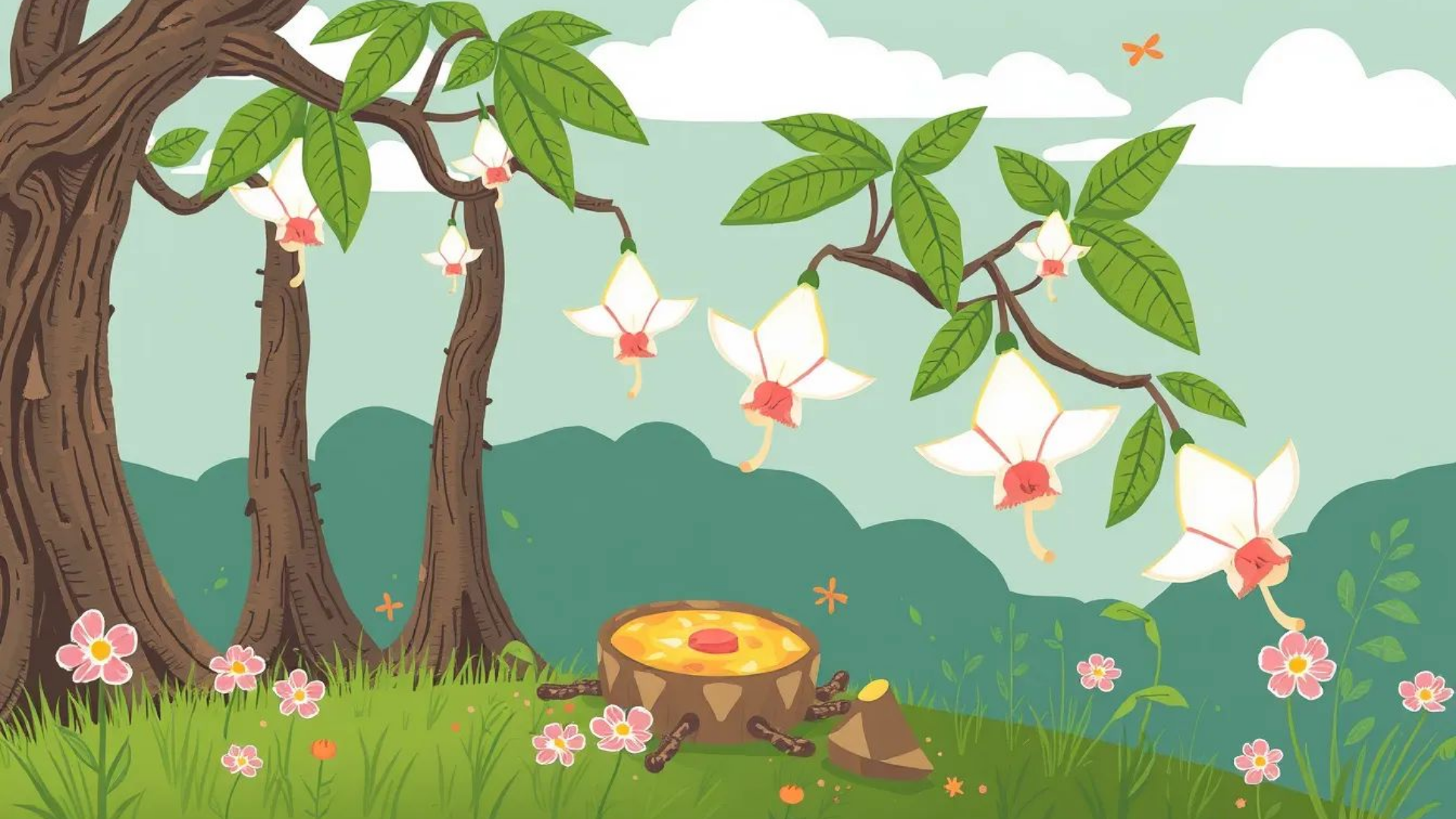
In the Sibundoy Valley I met Miguel, a Kamsá maestro, whose garden looked like a temple of impossible leaves. He grew dozens of Brugmansia cultivars, each with a name, a color and a temper. The Kamsá keep these plants not as curious but as companions: the long, slow work of cultivation, song, and discipline. They use this plant as a protector, they plant in front of the entrance of the maloka and in front of the doors of their houses.
Miguel told me, without boasting, that he diets with some of these plants every year to “renew” himself, to keep the body light and the sight long. I asked him if he would let me try. He shook his head and smiled. “If I give you the dieta, hermano, I have to babysit you for the whole week. You are twice my size. That is a job I’m not willing to take.” His refusal was not mystical, but practical: he knew that tending someone in the grip of toé is exhausting, and he had better things to do than shadow a delirious giant.
The lesson Miguel offered felt simple and old: you do not ask a plant for work it will not give you, and you do not ask a shaman to carry a burden he doesn’t want. Power comes with a price, and someone always pays.

The Comedy of Losing the Punchline During My Dieta
I did two eight-day diets with toé in Peru, and the weeks turned into a string of small, surreal disappearances. The first time I was handed a glass of tea made from just a few leaves, the weakest part of the plant, used at the beginning of a dieta, I shuffled back to my room and later emerged absolutely certain that nothing at all had happened. “I’ve been talking with Mark for an hour,” I announced, proud of my lucidity. The shaman looked at me slowly. “Who is Mark?” he asked. “There is no Mark here.” Oops.
That’s the thing with toé: the dieta starts gently with the leaves, then moves to the stronger flowers, and eventually to the seeds and the bark of the roots, which hold the deepest power. Even a handful of leaves was enough to trick me into thinking I was sober and in control, while I was already drifting in a world populated by people who weren’t there.
That’s the cruel joke of toé: you feel sober and in control while the world quietly peels itself away. I kept having conversations with people who did not exist. I walked into the kitchen and asked a guest to help me cut tomatoes: looked down and she wasn’t there. I turned to la maestra Alicia and told her, with solemn pride, “Maestra, this medicine is powerful: I keep talking to people who aren’t here.” It was only when I blinked twice that I realized she wasn’t either. My audience had evaporated; my performance continued.
My memory reset itself every five minutes, like a faulty clock. I would rise from my hammock to get a glass of water, forget why I was standing halfway down the path, turn back to the hammock — only to get thirsty again. I repeated this loop several times before I finally made it to the water. Life became a story with missing pages, little holes where the plot should be.
Most of what I know about those days comes from other people’s accounts: that I composed long messages on a phone I didn’t have, smoked cigarettes that weren’t there, and stared intently at a shower I never took. To me it all felt perfectly ordinary.
And yet inside the fog there was a strange grace. Forgetting made me lighter. Problems dissolved before they could form; tasks vanished before they could weigh me down. Even time itself unraveled, leaving only a drifting sense of presence. It wasn’t emptiness but a curious fullness, as though oblivion itself were alive. For a while, I lived in a world where forgetting was not a flaw but a gift, where the burden of memory fell away and eternity opened like a window.
Of course, the body told a different story. My pupils were blown wide, so everything near me blurred; reading the small letters of a book became a test of faith. My hands missed glasses by several centimeters. It was absurd, disorienting, and at times very funny — the kind of comedy you only appreciate later, once you’re safely back on the other side.
Maybe I had flashes of insight: maybe the river was populated by liquid deities and I was the only one who saw them, but I can’t reliably recall any of it. Both diets blur into a delightful fog of embarrassment, catharsis, and the horrible hilarity of watching yourself be undone.
There was one memorable episode that happened much later on: during a separate ayahuasca ceremony, a seasoned toé-dieter poured me a cup (this man dieted toé for one year). Halfway through the night, I realized I wasn’t on a typical three-hour ayahuasca arc; I was in toé time: the kind of long, weird, eight-hour territory where clocks stop pretending. The next day the toecero shrugged and said what I’d already guessed: “You are full of toé energy; it woke the toé that is already in your blood.” Eight months later I was still, apparently, a little haunted by this plant. “Toé in my blood” sounds like a tattoo I didn’t sign up for.
Clinical language would call these weeks delirium and amnesia. The vocabulary I prefer is more human: ridiculous, humbling, and oddly tender. There’s a funny kindness to that fracture: you return from the edge with stories that only make sense in the half-light. I felt like a baby relearning the basics: how to move, how to remember, how to trust that the glass is really there. Maybe that’s why shamans say toé is rejuvenating: because for a while, your brain stumbles back into infancy, awkward and new, and then begins again.
Naked Sadhus, Ashes, and Lassi
Years before, in India during Maha Shivaratri, I witnessed another version of the same poison-medicine paradox that runs through every culture touched by scopolamine. A band of sadhus drank bhang lassi laced with datura and then poured themselves into the streets, completely naked, their bodies smeared with the ashes of cremation grounds.
They were out of their minds: dancing, singing, shouting verses: mad, magnificent, and unashamed. To outside eyes it looked like chaos, but within the ritual frame it was devotion, an offering to Shiva, the god who swallowed poison and made it divine.
What the Kamsá shaman guards in Sibundoy and what the Peruvian vegetalista prepares with trembling care, these sadhus hurl straight into the fire of ecstasy: another reminder that scopolamine-bearing plants are not simply toxins, but gateways to the sacred, where delirium itself becomes prayer.

History & Geography: A Quick Wander Among Nightshades
These plants have been everywhere humans have taken them, leaving traces in archaeology, myth, and ritual. In the Andes, Brugmansia (known as toé or floripondio) appears in ancient iconography. At Chavín de Huántar (c. 1000 BCE), stone carvings show priests with visionary expressions, their hair transforming into serpent tendrils, while side panels display the unmistakable trumpet-shaped flowers. These are not ornamental motifs: they are records of trance, testimony that even in the earliest ceremonial centers of the Andes, scopolamine was already woven into the grammar of the sacred.
In North America, the evidence is more direct. At Pinwheel Cave in California, archaeologists discovered chewed quid bundles of Datura wrightii stuffed into rock crevices, alongside red ochre rock art in the shape of the flower itself. The context suggests communal vision rites: initiations where the plant was not recreational but initiatory, guiding participants through ordeal into belonging.
In Europe, the nightshades (henbane, mandrake, belladonna, and datura stramonium) became the dark constellation of witchcraft and folk medicine. Their scopolamine-rich extracts were the heart of the infamous “flying ointments,” inducing sensations of flight, out-of-body travel, and encounters with spirits. Medieval courts and the Inquisition turned these practices into evidence of pacts with the devil. The plants were feared as tools of sorcery, yet they persisted in apothecaries and grimoires: symbols of a dangerous knowledge that empowered those who were supposed to remain powerless.
In India, datura metel became sacred to Shiva. Offered on lingams and consumed ritually by sadhus, it mirrored Shiva’s swallowing of cosmic poison during the churning of the ocean. Among tantric lineages and ascetic sects, drinking datura meant stepping deliberately into the chaos of delirium as an act of devotion: holy madness sanctified by myth.
Across all these places and languages, the pattern repeats. The plants are never ordinary. They are not shared as daily food or friendly sacraments. They are restricted to specialists: shamans, witches, sadhus, ascetics, those who stand at the dangerous edges of society. And the cultural script is strikingly consistent: danger becomes authority. Whoever can survive delirium, master confusion, and return with vision gains the right to speak with spirits, to heal, to curse, to lead. Scopolamine-bearing plants are not just chemical curiosities; they are emblems of humanity’s ancient gamble: to risk poison in the hope of touching the divine.
Medicine and the Mind’s Boundaries
In medicine, scopolamine has worn many masks. For decades, it has been prescribed to calm seasick travelers and to quiet patients before surgery. It was even tested in the twentieth century as a so-called serum of truth, not because it forced honesty, but because it lowered defenses, relaxed inhibition, and allowed words to slip past the usual gatekeepers.
At the molecular level, scopolamine and its cousins block muscarinic acetylcholine receptors, breaking down short-term memory formation and loosening the ordinary scaffolding of perception. The mind misbinds, attention frays, and hallucinations can feel as real as waking life. In this disruption, strange things happen: memories unseal, emotions leak through, insights tumble out before the censor can polish them.
Modern research has gone further, exploring scopolamine as a rapid-acting antidepressant. At the U.S. National Institute of Mental Health, Dr. Maura Furey and Dr. Wayne Drevets showed that intravenous scopolamine could produce striking mood improvements within hours in patients with major depression, a speed usually reserved for ketamine. Later reviews (e.g., Drevets & Furey, Biological Psychiatry, 2010) linked the effect to a burst of glutamate release and new synaptic plasticity in mood-related circuits. Other trials have been mixed, with some finding smaller or inconsistent results, but the door is open. The picture is promising yet preliminary: scopolamine may act as a pharmacological “reset,” but it is neither benign nor well-tamed.
Toxicology is blunt. The therapeutic window is narrow: too much can trigger agitation, hyperthermia, respiratory problems, and life-threatening delirium. Forensics and emergency medicine see its criminal use as terrifying because victims often cannot recall what happened, and because the compound is metabolized so rapidly that traces vanish from blood or urine unless samples are taken almost immediately. That combination, physiological vulnerability plus evidentiary invisibility, is what makes scopolamine attractive to predators and dangerous to communities.
In the Amazon, accidents are rare but when they do occur, they almost always follow the same pattern: toé is mixed into ayahuasca and people are left unsupervised. Disoriented and out of control, they sometimes wander into the forest at night or fall into rivers, with tragic results. Sometimes it is the shaman’s negligence, but just as often it is the customers themselves who push for the combination, chasing a “crazy experience” without understanding the consequences. Most responsible healers refuse such requests, knowing that the line between vision and catastrophe is razor thin.
The therapeutic question is whether scopolamine’s temporary loosening of boundaries — between thought and speech, fear and expression, memory and oblivion — can be safely harnessed. In its most dangerous form, this erosion of control is terrifying. But reframed in a clinical setting, with intention and containment, it could become a tool for reaching the places where conventional therapy cannot go.
Depression, trauma, and anxiety often live behind fortified walls of defense and inhibition; patients circle endlessly in the same narratives, unable to move deeper. By momentarily softening those walls, scopolamine may allow words to flow more freely, emotions to surface without censorship, and buried memories to rise. This is why some psychiatrists once imagined it as a “truth serum,” and why modern researchers are revisiting it as a possible catalyst for psychotherapy.
The challenge, and the opportunity, lies in designing conditions where delirium becomes dialogue, where amnesia does not erase but instead opens a window long enough for insight to slip through.
Used with care, scopolamine might not only treat depression but also act as a companion in therapy, guiding patients into places they usually cannot go: the hidden rooms where grief, trauma, and long-suppressed truth wait to be spoken, and where the seeds of healing and possibility might be found.
The Moral Geometry: Teacher, Toxin, and Tool
There are three frames we move between: the teacher (the shaman and the initiate), the toxin (the street crime and accidental poisoning), and the tool (the clinician’s measured dose, the lab’s hypothesis).
When I watch a Kamsá elder bend to prune a plant, I do not think of a criminal network. When I read an embassy alert about dating-app robberies I do not think of an ayahuasca dieta. Yet they are braided together by a single truth: humans will take a technique and turn it to many uses.
That moral geometry opens a question that is part curiosity and part ethics: who gets to work with dangerous knowledge? For indigenous apprentices, the answer is lineage and responsibility. For racetrack thieves, the answer is anonymity and cruelty. For researchers, the answer must be regulation and humility.
Closing (A Little Magic)
On the last night of my second dieta, the plant stopped being a lecture and became a presence, not a teacher scolding from above, but a neighbor breathing beside me. There was no great revelation, at first a release from some old physical pain followed by a new sense of companionship in the fog, as if the delirium itself were saying: you are not alone in this confusion, the chaos is the ultimate nature of reality.
The burundanga that can erase a night in Bogotá, the toé that a Kamsá shaman diets within a valley, the datura that makes sadhus stagger naked under the ashes of death — all are, in their own ways, teachers. One teaches ruin; another, renewal; another, the holy madness of Shiva.
If there is a single thing I want a reader to carry from this essay it is that magic and menace live on the same spectral line: you can cross it both ways. Respect the plants that walk it; be wary of those who would make a tool of forgetting.
In the end, these plants remind us that the boundary between medicine and poison is as thin as a breath. They do not speak in certainties but in riddles, dissolving the ordinary order of things. To follow them is to learn that confusion itself can be a teacher, that danger can carry wisdom, and that even in delirium there is a strange form of grace.
Further Reading: Ethnobotany & History of Scopolamine Plants
- Plowman, Timothy (1981) – Brugmansia and Datura: Angel’s Trumpets and Thorn Apples. Ethnobotanical study of their ritual and medicinal use in the Andes.
- Schultes, Richard Evans & Hofmann, Albert (1992) – Plants of the Gods: Their Sacred, Healing, and Hallucinogenic Powers. Classic overview of sacred plants, including Brugmansia, henbane, belladonna, and mandrake.
- Dobkin de Rios, Marlene (1972) – Visionary Vine: Hallucinogenic Healing in the Peruvian Amazon. Anthropological account of ayahuasca and adjunct plants like toé in Amazonian shamanism.
- Harner, Michael (1973) – Hallucinogens and Shamanism. Includes essays on Datura and its cross-cultural role in shamanic initiation.
- Ginzburg, Carlo (1991) – Ecstasies: Deciphering the Witches’ Sabbath. Explores European nightshade lore, “flying ointments,” and their connection to witchcraft trials.
- Rosenthal, Franz (1991) – The Herb: Datura and Its Role in the Cultural History of India. A study of datura in Shiva devotion and tantric practices.
Key Studies on Scopolamine in Psychiatry
- Furey & Drevets (2006) – Archives of General Psychiatry: First double-blind study showing rapid antidepressant effects of intravenous scopolamine in major depression and bipolar depression.
- Drevets & Furey (2010) – Biological Psychiatry: Review of muscarinic receptor blockade, glutamate release, and synaptic plasticity as potential mechanisms for scopolamine’s mood effects.
- Furey et al. (2013) – JAMA Psychiatry: Follow-up trials confirming rapid mood improvement in some patients, with discussion of neural circuit changes.
- Zanos & Gould (2018) – Pharmacology & Therapeutics: Comprehensive review of scopolamine’s pharmacology, rapid antidepressant potential, and comparison to ketamine.