Written By: Fabrizio Beverina
Taoism and Amazonian Shamanism
Taoism as we know it today—with its parables, paradoxes, and subtle metaphysics—did not begin as abstract philosophy. Its roots lie in the shamanic soil of ancient China. Long before Zhuangzi or Laozi, the wu (巫 shamans) mediated between humans and the spirit world. The character resembles two figures dancing doing the job of connecting the sky to the earth.
They invoked wind and rain, entered trance, healed with ritual, and communicated with animals and ancestors. Taoism inherited this animistic worldview and slowly gave it more structure. Yet at its heart, it remained what it always was: a path of alignment with the unseen currents of nature.
When we remember this origin, Zhuangzi appears not as a detached philosopher but as a shaman-sage, a trickster poet still steeped in magic. He speaks of dreams and transformations, ridicules rigid knowledge, and points us back to the flowing mystery of life. In this sense, Taoism finds an unexpected resonance with Amazonian shamanism—another path rooted in the forest, in visions, in the living dialogue with nature.
The Current of the Dao and the River of the Jungle
“The highest good is like water. Water benefits all things and does not compete. It flows to the lowest places, which men disdain. Therefore it is close to the Dao.” (Dao De Jing, ch. 8)
For Taoists, the Dao is a current. To follow it is to release control, to float like a leaf on a stream. In the Amazon, shamans also speak of currents: the flowing of ayahuasca through the body, the river of songs, the movement of the spirits in the night. The key to a good ceremony is not resistance but surrender. Participants are told again and again: do not fight the medicine. If you struggle against it, you suffer. If you surrender—accepting, embracing, even loving what arises—the current carries you safely. The experience is like surfing a great wave: balance comes not by force, but by yielding to its motion.
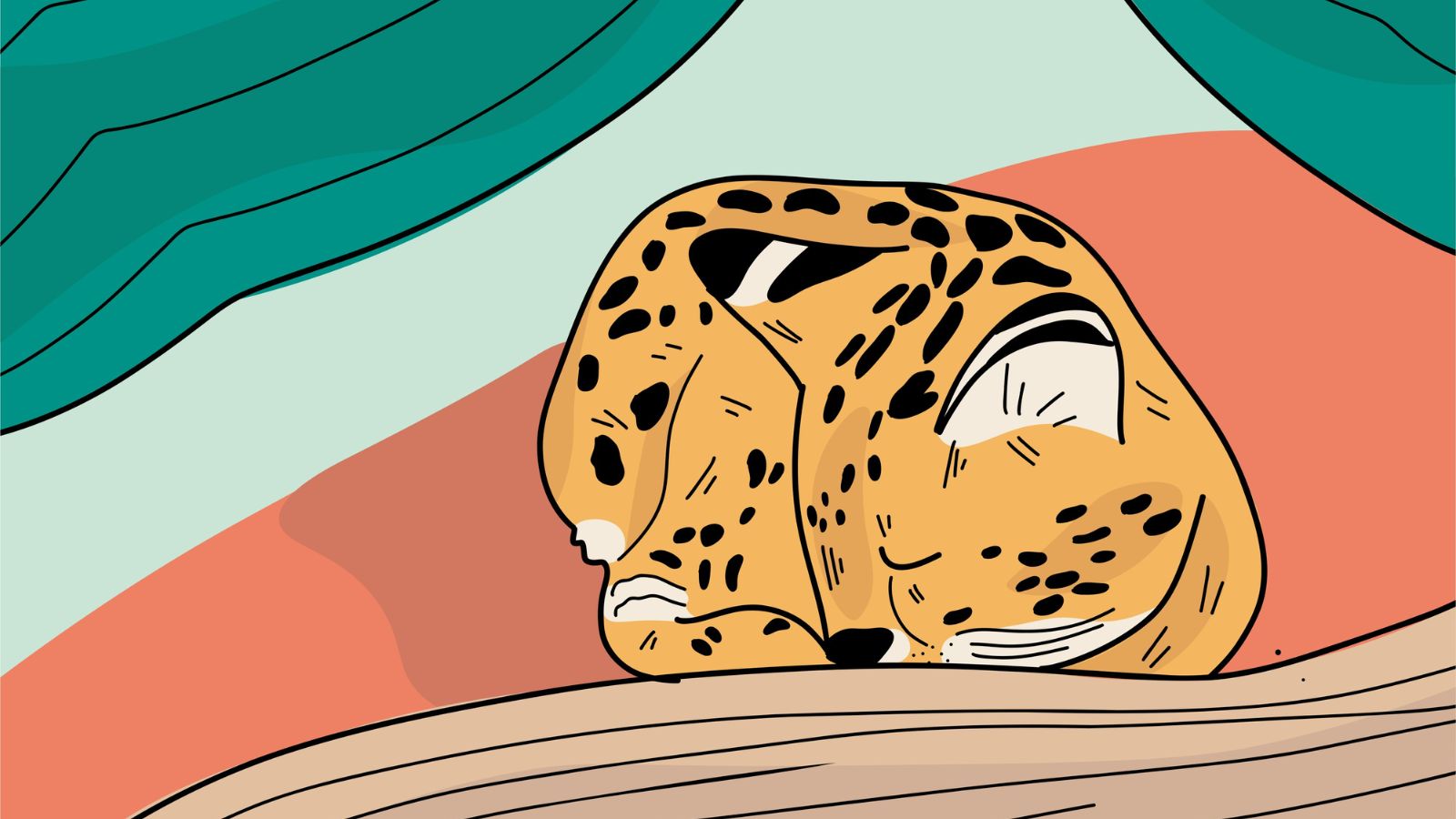
This is the wisdom of wu wei, the art of acting without forcing, moving as naturally as water around the stones. Yet this current is not only for those who drink. The shaman, too, does not steer the river; he lets the river steer him. Like the cat who curls on the chest of the one who most needs comfort, the shaman does not plot or decide.
He listens, and when the icaro wants to be sung, it sings through him. When the spirit wants to move, his body moves. He is not the doer but the flute through which the wind blows. His power comes not from intention, but from the absence of it.
In this way, the shaman is like water itself: never trying, yet shaping mountains; never claiming, yet nourishing all. Healing arises not from control, but from presence. Not from knowledge, but from being. The shaman does not conquer the mystery—he dissolves into it, flowing where it flows, becoming one more current in the great river of the night.
The Butterfly and the Jaguar
“Once Zhuang Zhou dreamt he was a butterfly, a butterfly fluttering happily. He did not know that he was Zhou. Suddenly he awoke, and there he was, solid Zhou again. But he did not know: was Zhou dreaming he was a butterfly, or was the butterfly dreaming it was Zhou?” (Zhuangzi, ch. 2)
Identity here melts like mist at dawn.
In the maloca, beneath the vine’s dark nectar, shamans do not merely imagine transformation—they become it. One moment they are flesh and voice, the next they are jaguar eyes gleaming in the night, serpent coils sliding through the currents of song, eagle wings rising on the smoke of mapacho. Their being bends and flows, as though the body were a costume the cosmos wears for a while, easily exchanged for another mask in the endless carnival of forms.
Ayahuasca does not simply loosen the edges of identity—it floods them. I have found myself dreaming another’s life, speaking with his voice, remembering with his memories, forgetting entirely that Fabrizio ever was. And sometimes, even that fragile thread breaks, and there is no “he” or “I” at all—only a vast, luminous emptiness breathing through the jungle. Awareness without anchor. Vision without viewer. The raw pulse of existence itself, the nameless Dao before heaven and earth split apart.
Like Zhuangzi waking unsure if he was man or butterfly, the ayahuasca traveler wakes unsure if he was himself, another, or no one at all. Yet this is the teaching: identity is a ripple, not the river. A whirlpool, not the water. To cling is to drown; to let go is to discover that you are the current, flowing through butterfly wings, jaguar paws, human hands, and silence alike.
Cleansing the Body, Awakening the Spirit
In both traditions, the body and the spirit are two sides of the same coin. Transformation comes through purification.
In Taoist alchemy, the practice of Yijin Xisui—“changing the tendons and washing the marrow”—begins with cleansing the meridians, continues with strengthening the tendons, and culminates in purifying the marrow. The result is rejuvenation of both body and mind. The classics describe this process as the descent of “heavenly dew,” refreshing the crown and clarifying the spirit.
Once, I lived upon a Taoist mountain near Dali in Yunnan, where the clouds themselves seemed to teach. Each dawn they rolled down the slopes like silent masters, veiling the valleys in softness. It was there that the monks invited me to play tuishou—pushing hands. I thought it was a contest, but found myself pushing at phantoms. My strength dissolved into theirs as though I were grappling with mist.
No matter how firmly I pressed, I met only absence. My own force threw me off balance, and I fell again and again, defeated not by resistance, but by its disappearance. The mountain whispered a secret: you cannot fight what offers no fight. When space replaces opposition, the battle dies of emptiness.
Amazonian ceremonies mirror this same law. Before visions, there is purga: sweat, vomit, tears, diarrhea. The body expels toxins so that the spirit can travel freely. The cleansing is not merely biological—it is symbolic. By emptying, space is created. And into that space, something new can descend.
This is one of ayahuasca’s most profound lessons: the old self must sometimes die for the new to be born. In the void left by purging and surrender, a fresh identity, a deeper connection, or a new understanding can take root. The emptiness is not absence but possibility.
Taoist texts echo this: “Thirty spokes share one hub. It is the empty space that makes the wheel useful.” (Dao De Jing, ch. 11). Emptiness is the secret of transformation. In martial practice like Taiji, the adept learns to be soft, fluid, and receptive, using the opponent’s strength rather than resisting it. As Bruce Lee once summarized: “Be water, my friend.”
The same applies in the maloca. To fight the medicine is to suffer. To surrender is to flow like water, bend like bamboo, yield like a cloud. Emptiness here is not weakness, but the highest form of power. The purge is not simply expulsion, but the carving out of space for the forest to sing inside us.
Laozi wrote: “The softest thing in the world overcomes the hardest.” (Dao De Jing, ch. 78). Ayahuasca teaches the same: when we become soft, empty, fluid, life can reshape us.
Knowledge Beyond Words
“To know without knowing is best. Not knowing, yet thinking you know, is a disease.” (Dao De Jing, ch. 71)
True knowing is not carved in concepts but breathed in silence.
In the Amazon, shamans also trust what cannot be explained. They sing icaros, blow tobacco, and rattle chacapas. They heal through resonance, not discourse. The deepest truths arrive not as definitions but as vibrations.
Ayahuasca itself is said to have a language—a speech woven of visions, sounds, and sensations. The forest speaks in colors and patterns, in animal voices and luminous geometries. Shipibo shamans describe how the plant spirits reveal kené, intricate designs of light that are both song and tapestry. Each line, each curve corresponds to a vibration. When a shaman sings an icaro, he is painting that design into the patient’s body with sound. Healing is not explained—it is sung into being.
Others speak of serpents that coil through the vision space, whispering secrets of the plants, or of birds whose calls rearrange the mind. Sometimes the medicine teaches by dissolving the ordinary senses altogether, leaving only vibration, presence, a knowing without thought.
Once, I heard a guest ask a shaman about enlightenment. The shaman looked at him, amused, and replied: “Enlightened? Do you mean you want to become a firefly, or perhaps a light bulb?” His answer was not mockery but medicine: he cut through the fog of abstraction with a smile, reminding us that the jungle knows nothing of metaphysical jargon. Light is not an idea to chase—it is something that flickers in the dark when it needs to, then vanishes again.
I remember too when a journalist interviewed La Maestra Alicia. He asked her what she thought about the afterlife. She was puzzled by the question itself, not understanding why such speculation mattered. I translated, helping her grasp it. Her answer was simple: “In my ayahuasca visions, I saw the spirits of the dead.” Full stop. No theories, no deductions, no proclamations of heaven or eternity. The experience was what it was, nothing more and nothing less.
This is the wisdom both Taoism and ayahuasca share: that truth dissolves when we inflate it with abstraction. Zhuangzi laughed at philosophers who argued endlessly about definitions, saying they had lost the Dao in their words. “The Dao that can be spoken is not the eternal Dao,” says Laozi at the very opening of the Dao De Jing. So too with the medicine. To trap it in explanations is to kill it. Better to laugh, like the shaman with his fireflies, or to answer simply, like Alicia: to point only to what was truly seen, and let mystery remain intact.
And in our center, I have seen again and again that those most in love with abstraction—philosophers, psychologists, the professional explainers of life—are often the ones who grow the least. They arrive with their notebooks and their concepts, trying to trap the spirit of ayahuasca the way a child tries to catch fireflies in a jar. But the more tightly they close the lid, the quicker the light goes out.
They want reasons, categories, tidy maps of the ineffable. Yet the medicine does not speak in syllogisms; it speaks in serpents and jaguars, in laughter and tears, in vomit and visions. To insist on decoding it is like trying to analyze the grammar of thunder. While they measure, the storm has already passed.
Ayahuasca is not an essay to be graded, nor a thesis to be defended. It is a language of paradox and metaphor, beyond comprehension but piercing directly to the marrow of what we are. Those who try to “understand” miss the point entirely, like someone trying to study the river with a microscope while refusing to dive in.
And so the philosophers write in circles, the psychologists diagnose their own shadows, and the jungle smiles patiently, untouched. Meanwhile the humblest guest—the one who surrenders, who absorbs without grasping—often walks away transformed.
Because the medicine was never asking to be understood. It was asking to be lived.
Laughter in the Sacred
“He who knows does not speak. He who speaks does not know.” (Dao De Jing, ch. 56)
Zhuangzi’s Dao is playful, elusive, laughing at the pomp of kings and scholars. His parables often mock seriousness itself, reminding us that truth wears a crooked smile.
So too in the Amazon, laughter is medicine. Shamans tease spirits, lighten fear with jokes, and weave humor into the ceremony. A sudden burst of laughter in the maloca can dissolve terror more effectively than any solemn prayer. Sacredness here is not grim gravity—it is alive, mischievous, smiling.
Indigenous worlds are not “serious” in the Western sense. In many tribes, the word for “work” is the same as the word for “play.” Life itself is a game, a dance, a weaving of stories. To “play” reality is to participate in it with joy, curiosity, and humor. Healing happens not only through tears but also through laughter, through the playful unraveling of the ordinary.
A central figure in this worldview is the trickster. Among the Shipibo, the chulliachiachi embodies this force—the mischievous spirit who confuses, teases, and disorients. The trickster uses riddles, reversals, and nonsense to make you lose your bearings. But this disorientation is medicine. By getting lost, you awaken. By laughing at your confusion, you see through the seriousness of your ego.
The trickster in Amazonian shamanism and Zhuangzi in Taoism serve the same function: they pull the rug from under certainty, exposing the ridiculousness of rigid control. They remind us that wisdom is not about holding firm positions but about dancing lightly with the absurd.
As Zhuangzi might say, the Dao hides in jokes. And as the shamans know, the spirits often come laughing.
Healing the Web
“Heaven and earth were born with me; all things are one with me.” (Zhuangzi, ch. 2)
For Taoists, opposites dissolve. Life and death, sickness and health, light and darkness are not enemies but phases of one unfolding. The Dao is not partial; it embraces paradox.
Amazonian shamans weave this truth into their practice. They know that the hardest ceremonies—the nights of fear, confusion, or overwhelming visions—are often the most healing ones. What feels unbearable in the moment may open the deepest transformation afterward. The purga that empties you until nothing is left, the vision that terrifies you, the memory that breaks your heart—these are not punishments but medicines.
In ayahuasca, there is no fixed good or evil. There is only what is. Some spirits frighten, others soothe. Some nights are luminous, others dark. Yet all belong to the same current of healing. Shamans teach that to resist or label the experience is to miss its power. To accept reality as it comes—even when it is paradoxical, even when it is contradictory—is to align with the medicine.
This mirrors Taoist wisdom. Laozi wrote: “When people see things as beautiful, ugliness is created. When people see things as good, evil is created.” (Dao De Jing, ch. 2). Both Taoism and ayahuasca dissolve these dualities, teaching that suffering and joy, terror and ecstasy, are woven together like night and day.
Healing comes not from erasing the dark but from including it—seeing that the web of life holds both shadow and light. The jaguar prowls in the night as surely as the butterfly flutters in the day. And in their dance, the whole is revealed.
Exorcising Shadows
Both Taoism and Amazonian shamanism recognize that some illnesses are not only physical but caused by intrusions—spirits, wandering entities, forces that cling to a person’s body or soul. In the jungle, I have seen shamans drive these presences away with smoke, song, and breath. They blow thick streams of mapacho like serpents of protection, rattle the chacapa like thunder, spray agua florida to cut through heaviness, and sing icaros that weave into nets of light.
At times it looks like warfare. Guests tremble, vomit, or cry out with voices not entirely their own while the shaman chants close, sucking the illness into his body before spitting it out. Other times it is subtler, a long sigh and a softening of posture as if a hidden weight has finally lifted. I have witnessed spirits leap into nearby animals—a dog howling in the night, a cat screaming as though struck—before dissolving into the darkness.
The results are undeniable. A man tormented by months of nightmares found peace after one such cleansing, sleeping soundly for the first time. A woman bent by years of grief stood straighter, her face lightened, after a long night of tears and song.
Taoist medicine, too, sometimes describes sickness as possession by malignant energies that must be expelled. Two worlds, two languages, yet the same insight: health is not only balance within, but freedom from what presses upon us from beyond. As a scientist, I can only record what I see—trembling bodies, sudden liberations—and admit that such truths defy reason. In those nights, healing feels less like medicine than myth made flesh.
The Meeting of Forests
Taoism began as shamanism and grew into philosophy—yet it did not stop there. Like a great tree branching in every direction, it spread into a series of practices: breathing arts, inner alchemy, martial forms, and an entire medical system rooted in the flow of qi. It gave birth to feng shui, to oracles like the I Ching, to ways of harmonizing body, spirit, and landscape.
In the typical Chinese way, it crystallized what was once wild and visionary into structures both subtle and practical, shaping daily life as much as cosmic vision. The shaman’s trance became the physician’s diagnosis, the geomancer’s compass, the philosopher’s text, the monk’s meditation hall. What began as raw communion with spirits unfolded into a whole civilization’s art of living. Taoism grew into a system that anyone could learn, a set of practices that could be taught, repeated, transmitted.
Through study and discipline, anyone could become a doctor of Chinese medicine, a reader of the I Ching, a practitioner of Taiji. The mystery was shaped into methods, the ineffable poured into vessels so that even those without visions could drink. It became a path open to the many.
Amazonian shamanism is different. It has remained a calling for the few—something you do not choose so much as it chooses you. Shamans are often born into lineages, or seized by crisis, illness, or madness that cracks open the spirit and forces them onto the path. It is not a school but an initiation, often through suffering. One does not “study” to be a shaman; one survives, and in surviving, is remade.
Thus, Taoism and Amazonian medicine stand like two branches from the same root. Taoism systematized the shamanic inheritance, refining it into a civilization’s art of life, accessible to anyone who wishes to practice. Amazonian shamanism kept its wild edge, remaining in the hands of those the spirits themselves select. Both guard the same truth—that the world is alive, and healing means flowing with its currents—but one built bridges so all could cross, while the other still guards the narrow paths that only the initiated dare to walk.
Both ways of knowing were born in the forest. Surrounded by immense, breathing nature, the sages and shamans bowed to its perfection. The mountains, rivers, and trees were not scenery but teachers. The forest itself was the first scripture. In the Amazon, this presence is called Pachamama, Mother Earth—the great mother whose body is the soil, whose breath is the wind, whose veins are the rivers. To walk into the jungle is to enter her cathedral.
Rediscovering our true nature means rediscovering that we are not separate from this living world. Our lungs mirror the branches of the trees. Our veins flow like rivers across the body. The sparks of our neurons flash like lightning in the sky. We are a holographic microcosm of the macrocosm, the inner and outer woven as one. To remember this is to remember the Dao, to remember the medicine.
This connection is not abstract—it is practical, embodied. In Chinese Taoist medicine, healing follows the principle of resonance between the body and the natural world. Each organ is linked to a flavor, a color, and an element. Bitter herbs such as huang lian (coptis) or ku shen (sophora root) are used to purge heat from the liver and heart. Red plants like goji berries or cinnabar minerals nourish the blood and vital essence.
Walnut kernels, with their brain-like shape, are taken to strengthen the kidneys and support mental clarity. Polygonum roots, long and sinewy, are used to treat tendons and bones. Ginseng, shaped like a human body, is considered a tonic for overall vitality. Even twisted vines and spiraling roots are used for circulatory disorders, while moist, mucilaginous plants like tremella mushroom restore body fluids and yin. The doctrine is simple yet profound: the form, flavor, color, and energy of a plant or mineral reflect its healing property in the human body. Nature writes its instructions into shape and taste, and the healer learns to read them.
The Amazonian healer follows the same principle. A plant with milky sap is given to nursing mothers. A vine with winding strength fortifies the body. Leaves shaped like a heart are brewed for emotional healing. The jungle is read like a living text, where every form carries a message for the body that mirrors it. Yet unlike the Taoist doctor, who learns from books and lineages of codified knowledge, the Amazonian shaman learns directly from the forest itself.
The teachings are not written—they are sung by the spirits, revealed in dreams, whispered by plants under the night sky. The shaman does not need to know beforehand; he needs only to know how to enter the source. Through trance, through the song, through the medicine, he steps into that hidden library where every answer waits. There, he finds the cure, the plant, the path for healing the sickness at hand.
But civilization has layered us with ideas—of control, separation, exploitation—that obscure this truth. Both Taoism and Amazonian shamanism remind us that to find our true nature, we must first cleanse ourselves of these illusions. Ayahuasca purges the body and the ego; Taoist practice empties the heart of false striving. Only when we let go of what we think we are can we rediscover what we have always been: nature itself.
As Laozi said: “Man follows the earth. Earth follows heaven. Heaven follows the Dao. The Dao follows what is natural.” (Dao De Jing, ch. 25). And the shamans sing the same: we are children of the forest, sparks of Pachamama, branches of the great tree of life.
To heal, we must return—not to an imagined paradise, but to the living recognition that our nature and Nature are one.