Written By: Fabrizio Beverina
Reclaiming the Sacred Leaf Once Honored by Empires and Now Feared by Nations
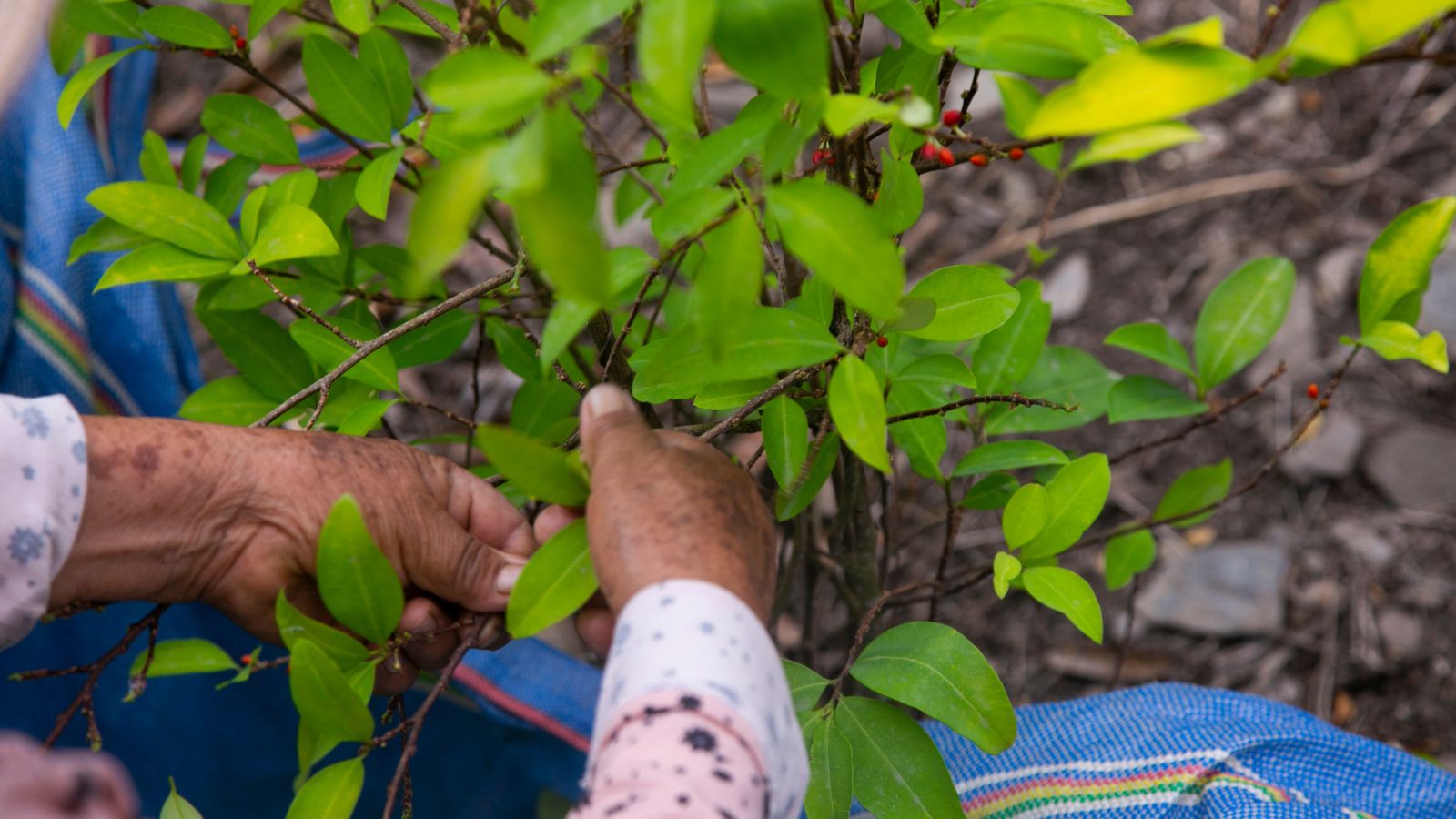
Alongside tobacco, coca is one of the most sacred and widely used plants across South America: from the Caribbean coasts of Colombia to the southern reaches of Chile. Archaeological evidence suggests that coca leaves were already being used over 3,000 years ago, with residues found in the fabrics of mummified remains in northern Chile dated to around 1000 BCE. For millennia, Andean peoples have revered coca not only for its medicinal benefits but also as a magical plant central to countless rituals.
I first encountered coca at the turn of the century, during a rapid ascent from the Peruvian coast into the Andes. I was struck with acute altitude sickness, piercing headaches, and labored breath. At a dusty roadside bus stop, a local offered me a cup of coca tea. From that moment on, it became my drink of choice. I completed the three-day Machu Picchu trek without issue, hauling a heavy load. By the end, my urine smelled faintly of coca.
In Potosí, I chewed coca with miners, mixing it with the traditional “piedrita” (alkaline lime) to activate its effects. Later, in the Colombian Amazon, I discovered mambè, a refined preparation of coca powder used in rituals by the Huitoto people. There, coca was not merely a stimulant but a living spirit, handled with ceremony and deep reverence.
A few months ago, I was invited to spend time with the Kogi tribe of the Sierra Nevada de Santa Marta in Colombia, one of the last Indigenous cultures to resist colonization and maintain a continuous, unbroken relationship with the Earth.
There, I witnessed the ritual of the poporo. To outsiders, it may look like a man simply touching a stick to his lips and rubbing it along the rim of a gourd. But what unfolds in this simple gesture is a profound form of meditation. The poporo is a sacred vessel that contains powdered seashell lime. The men chew coca leaves and then dip the stick into the lime, gently applying it along the edge of the poporo as they enter into silent reflection.
This process is not a habit. It’s a spiritual technology.
By chewing coca and using the poporo, the Kogi connect with the spirit of the natural world. It is how they ask permission before acting, how they receive visions, how they dialogue with the Earth. They don’t use the coca leaf to escape but to listen. In the words of their elders, the act of “poporear” helps maintain the balance of the world, a balance that, they say, has been gravely disrupted by younger brother: the Western world.
The Kogi mamas (shamans) poporo constantly. They do it not for themselves, but for us, for the Earth, for the mountain, for the memory of harmony. They believe that each thoughtful touch of the poporo sends ripples back into the invisible architecture of the world, helping reweave what has been torn apart.
When you witness this, when you feel the silence they create around a handful of leaves, you begin to understand: we haven’t just misunderstood coca,we’ve desecrated it.

Photo courtesy of BBC News
Sacred Preparation of Mambé–An Erotic, Life-Creating Ritual
A few times, I had the chance to join the huitotos (an indigenous ethnic group of Colombia) in their maloca, the communal longhouse temple, for the preparation of mambé (sacred coca powder). It’s a ritual that unfolds as a re-enactment of creation itself. Elder wisdom-keepers gather around a hollowed fruit husk, a vessel symbolizing the womb of Mother Earth. Into this “womb” they place handfuls of fire-toasted coca leaves, the plant revered as a divine feminine being, the first woman and source of life.
The atmosphere is reverent and sensual: fragrant wisps of roasted coca mingle with the rhythmic sound of the bloodwood pestle, a heavy crimson wooden club, as it is raised and brought down in steady, circular motions. This pestle is carved from lustrous blood-red wood and handled with ritual care, understood as the potent phallus of the Creator. With each gentle pounding, the elder performs a sacred lovemaking, marrying leaf and wood, earth and sky.
Under the pestle’s embrace, the brittle leaves crackle and surrender, gradually grinding into a fine emerald-green powder. The maloca fills with the earthy perfume of coca and a palpable sense of anticipation; a green powder fills the air. At the proper moment, ashes are introduced, the crucial ingredient that completes this fertile union. These pure white-gray ashes are obtained by burning the dried leaves of the yarumo tree, a process done in daylight before the ritual.
In Huitoto understanding, these yarumo ashes are the Creator’s seed, the very “semen” of Father Creator in material form. Elders recount how in the mythic time, the world was once barren and the Father Creator roamed in search of a womb “to cast his semen on,” but found none. His seed became salt, the vegetable salts in these ashes, carrying the raw power to spark life. Now, as the ashes are poured into the coca powder, it is as if that primordial seed is finally finding its mark.
The elder’s hands move with practiced grace, sprinkling the ashes over the crushed green coca like a slow, deliberate fertilizing rain. Instantly, a quiet alchemy begins: the dull olive flakes of leaf take on a new vibrancy as ash and coca merge. In scientific terms, this ash is highly alkaline, a natural catalyst that “sweetens” the bitter leaf and “strengthens its effects”.
The ashes chemically activate the coca’s sacred alkaloids by raising their pH, unlocking the leaf’s potency so the body can absorb it. Yet in the sacred framework of the Huitoto, this chemistry is also poetry: the male seed is igniting the female plant, quickening her spirit. Just as a sperm and egg unite to conceive new life, the ash and coca unite to conceive mambé.
With the preparation complete, the elder carefully sifts and winnows the powder, removing any coarse fibers until only the silken “green flour” remains. He holds up a pinch of the finished mambé between finger and thumb to taste the quality. In the low firelight, the green powder is luminous, a fertile child of ritual. It carries the word of life of the Father (his salty creative essence) now fused with the nurturing leaf of the Mother. In myth, the Creator declared that this salt-seed would be like milk for future generations, nourishing them so that “with this they will have children” and a full life. And so it is: the Huitoto regard mambé as a sustenance for the soul, a life-giving food that connects them to the origins of life.
Moments later, the mambé will be shared in the mambeadero, the nightly talking circle. One by one, participants take a wooden spoon of the green powder and place it in their mouths, “breast-feeding” on the Creator’s milk and the Mother’s flesh in a profoundly symbolic communion. As the alkaline ashes unlock coca’s stimulating alkaloids, a gentle clarity and focused energy spreads through the circle. But more importantly, by chewing this sacrament each person internalizes the union of male and female, sky and earth. Spiritual insight, fertility of mind, and communal harmony are born from that union.
In this way, the preparation of mambé is far more than a recipe, it is ceremony, myth, and creation made tangible. The erotic charge and life-creating power imbued in each particle of mambé remind the Huitoto that every night, as stories and wisdom flow, they are nourished by the love of Father Creator and Mother Coca. Together, in ritual, they chew the fruit of creation, keeping alive the original harmony between the divine masculine and feminine, and sustaining the living heritage of the people with each green mouthful of truth.

The Living Spirit of the Leaf
For the Huitoto, mambè is not just a preparation; it is a spirit to be honored, a living ally carried close to the heart. Every man walks with his personal pouch of mambè and its counterpart, ambil, a dense, bitter paste made from tobacco and vegetal salts. Before each spoonful of mambè, a man touches a fingertip to the ambil and places it gently on his tongue. This bitter kiss awakens the mouth, softening the palate for the dry, astringent coca to come.
With ritual care, a small mound of green powder is shaped into a ball and nestled between cheek and gum. Then, the plant does its work, slowly, quietly, almost imperceptibly. Over time, the body stirs. The spirit of coca begins to hum beneath the skin.
I’ve used mambè while alpine climbing, and it carried me further than any energy drink ever did. A friend uses it for writing, saying it clears the noise and sharpens the current of thought. At our ayahuasca center, we offer mambè in post-ceremony sharing circles. I’ve seen guests, tight-lipped, armored with silence, melt into unexpected rivers of speech after only a few spoonfuls. The plant seems to unstick what is stuck, to soften what is rigid.
Among the Huitoto, mambè is a tool for communal harmony. It is passed around during gatherings to ease dialogue, to navigate conflict, to give shape to truth. They call it la palabra dulce, “the sweet talking.” And rightly so: mambè smooths rough edges, opens ears, and makes space for honesty to land with gentleness. In this green powder lives not only the energy of the plant, but the memory of how to speak with care, and how to listen from the heart. The talking circles are actually more like listening circles.

The West’s Great Mistake
The Western world, tragically, came to see the coca plant only through the narrow lens of its most notorious extract: cocaine. This reduction of a sacred, multifaceted leaf to a single dangerous commodity overshadowed coca’s rich cultural and medicinal significance. For millennia, Indigenous Andean and Amazonian peoples have revered Mama Coca, the embodiment of the coca plant, as a source of nourishment, medicine, and spiritual connection to the land. But the colonial and scientific gaze fixated on isolating one alkaloid from coca leaves, divorcing it from its holistic context and setting the stage for a legacy of addiction, stigma, and cultural erasure.
As ethnobotanist Wade Davis observes, “Declaring that coca is only cocaine is like saying that potatoes are only vodka”: a poignant reminder of the absurdity of equating the whole sacred plant with its distilled intoxicant.
When the Spanish first saw Andean people chewing coca, they called it devil’s work. But when they noticed it made enslaved miners work longer without food or rest, they had a change of heart. Suddenly, coca wasn’t witchcraft, it was good business. They taxed it, traded it, and turned a sacred plant into a colonial cash crop. No need to understand it, just exploit it.
Then came 1859, when a German chemist isolated cocaine, ripping one alkaloid from the plant’s complex chemistry. The West fell in love. Doctors, popes, and Freud himself got high on purified coca. Cocaine became a “miracle cure” for everything from fatigue to depression. It made its way into wines, tonics, and, yes, Coca-Cola.
But the party didn’t last. Addiction set in, headlines panicked, and the same elites who once glorified coca now called it a menace. They didn’t just outlaw cocaine, they outlawed the entire plant. The UN declared coca a narcotic, as dangerous as heroin. Ancient traditions were suddenly criminal acts. A leaf chewed for thousands of years became a global scapegoat.
And while Indigenous farmers had their fields burned, their medicine banned, and their communities criminalized, Coca-Cola was quietly granted a legal exemption to keep using coca in its secret flavoring. The message was loud and clear: sacred for you? Illegal. Profitable for us? Protected.
This is how the West treats sacred plants: extract the molecule, ban the culture, sell the flavor. Coca isn’t the problem, colonialism is.
Coca is not cocaine. And what we did to this plant, and its people, is the real addiction: power without respect. Profit without soul.
The Healing Benefits of Coca
Despite this troubled history, coca’s medicinal gifts endure, acknowledged in both ancestral practice and modern science. Far from being a dangerous narcotic, the whole coca leaf is a natural remedy offering a spectrum of health benefits. Indigenous peoples have long known these benefits, and contemporary research is now shedding light on how coca works as a medicine. These healing properties are a testament to the wisdom that Western reductionism nearly erased:
Increased Energy and Stamina
Coca leaf is a gentle stimulant that wards off fatigue and boosts endurance. Andean miners, farmers, and messengers traditionally chew coca during long workdays or arduous mountain treks, finding that it banishes hunger and keeps the body energized. When chewed, the leaf slowly releases small doses of its alkaloids, providing a mild uplift comparable to coffee that can be sustained for hours without jitteriness or crash.
This boost in energy and stamina enabled Indigenous communities to thrive in harsh environments, a benefit now understood to stem from coca’s ability to enhance glucose availability and metabolism, thereby fueling the body in times of exertion.
Digestive Support
Coca has long been used as a remedy for digestive ailments. In the Andes, people brew coca tea (mate de coca) to soothe stomach pain, indigestion, and nausea, or chew the leaves to ease cramps and bloating. Modern research confirms these benefits: coca tea has mild analgesic and anti-spasmodic properties that can relieve intestinal cramps and improve sluggish digestion. It has even been given to treat diarrhea and constipation, reflecting its role as a regulator of the gut.
In an age before modern pharmaceuticals, coca was a primary defense against digestive ills, and even today, Andean communities trust this herbal medicine for maintaining a healthy stomach.
Altitude Adaptation
One of coca’s most celebrated uses is helping people endure high altitudes. In the thin air of the Andes, where oxygen is scarce, coca leaf is a lifesaver. Chewing coca significantly reduces the headaches, dizziness, and weakness that often plague those who live or work in the mountains. Indigenous highlanders have known for generations that coca “withstands hypoxia, cold, and hunger,” making it indispensable for altitudesickness. Scientific studies have investigated this folk wisdom.
Not only does coca provide an energy boost that counteracts altitude fatigue, but researchers found coca users may have a physiological advantage: coca’s compounds appear to moderate the body’s response to low oxygen. Specifically, alkaloids in the leaf may prevent an overproduction of red blood cells at high altitude, which in turn reduces blood thickness and improves circulation in thin air.
Pain Relief
Coca’s analgesic properties have been valued both in traditional medicine and modern pharmacology. Cocaine, the isolated alkaloid, was famously used as an early local anesthetic in ophthalmology and dentistry, but long before that, Indigenous healers applied coca leaves to wounds and aches for natural pain relief. Chewing coca numbs the mouth and throat, producing a tingling anesthesia that can soothe a sore throat or quiet a nagging toothache.
Andean people would place coca poultices on painful joints or injured limbs, taking advantage of its mild numbing and anti-inflammatory effects. Today, derivatives of coca (like Novocain and lidocaine) are widely used in medicine as local anesthetics, a direct legacy of coca’s pain-deadening power. Unlike pharmaceutical painkillers that can be addictive or cause side effects, the coca leaf’s pain relief is localized and gentle.
Oral Health
Related to its analgesic use, coca has notable benefits for oral health. Chewing coca can relieve painful oral sores and even promote their healing. The leaf’s medicinal compounds act as mild antiseptics in the mouth, helping to cleanse infections and reduce inflammation of the gums. Traditional users often chew coca to soothe gingivitis or after tooth extractions, finding that it reduces swelling and discomfort.
Additionally, the act of coca chewing stimulates saliva production (much like chewing gum), which can help wash away bacteria and food particles, contributing to cleaner teeth. While chronic coca chewing can stain teeth and, if mixed with abrasive lime, even wear them down over many years, moderate use in traditional contexts did not lead to severe dental problems.
Cognitive Enhancement
Users of coca often report a gentle enhancement in mood and mental clarity. In traditional settings, coca chewing is not about getting “high”, it’s about achieving a state of alert calm that aids in focused work and communal dialogue. The leaf’s mild stimulant effect can sharpen one’s thinking and lift the spirit out of fatigue. Indigenous elders say Mama Coca “provides narrative powers,” helping them concentrate and speak wisely during long community meetings or rituals.
In modern terms, coca can be seen as a nootropic aid: it improves concentration, banishes mental fog, and even has antidepressant qualities. Scientific interest in coca has noted its potential as a fast-acting mood elevator and antidepressant agent. By releasing dopamine and other neurotransmitters in a controlled, steady manner, coca can enhance cognitive performance and elevate mood without the jittery highs and lows of refined drugs.
Crucially, whole coca does this without causing the paranoia or comedowns associated with pure cocaine. It is a productivity aid and focus enhancer anchored in an herbal matrix. I know many Andean professionals today, from farmers to students, continue to chew coca or drink coca tea to remain alert and clear-minded through their day, much as others elsewhere rely on coffee. The difference is that coca provides mental invigoration alongside nutritional support (calories, vitamins), truly feeding both mind and body.

Whole Leaf, Whole Wisdom
At the heart of all this lies a simple truth: coca is not just a plant, it’s a teacher. But while Indigenous people treated it with respect, chewing it slowly, in ceremony, in balance, the West did what it always does: extract the one flashy molecule (cocaine), throw away the rest, and then act shocked when it turns toxic.
Coca leaf is full of nutrients, minerals, and over a dozen gentle alkaloids that work together. Cocaine? It’s just one of them. Indigenous wisdom knew this. Western science didn’t care. In its rush to isolate “the active ingredient,” it stripped the soul from the plant and ended up with a drug that hijacks the brain. That’s not medicine. That’s a chemistry accident.
Now, modern research is finally catching up: chewing coca doesn’t cause addiction. It uplifts, nourishes, relieves pain, and helps you breathe at altitude. The leaf has a built-in balance, the bitter taste, the slow absorption, the community rituals, that make overuse unlikely. Compare that to snorting a powder in a bathroom stall. Context matters.
The Western model says: “Find the magic molecule, patent it, sell it, or ban it.” The Indigenous model says: “Form a relationship with the plant. Listen. Give thanks.” One creates harmony. The other creates cocaine.
Coca invites communion. Cocaine drives consumption. That’s the real difference, and it says a lot about how we treat not just plants, but life itself.
Maybe it’s time to stop fighting the leaf and start learning from it.